
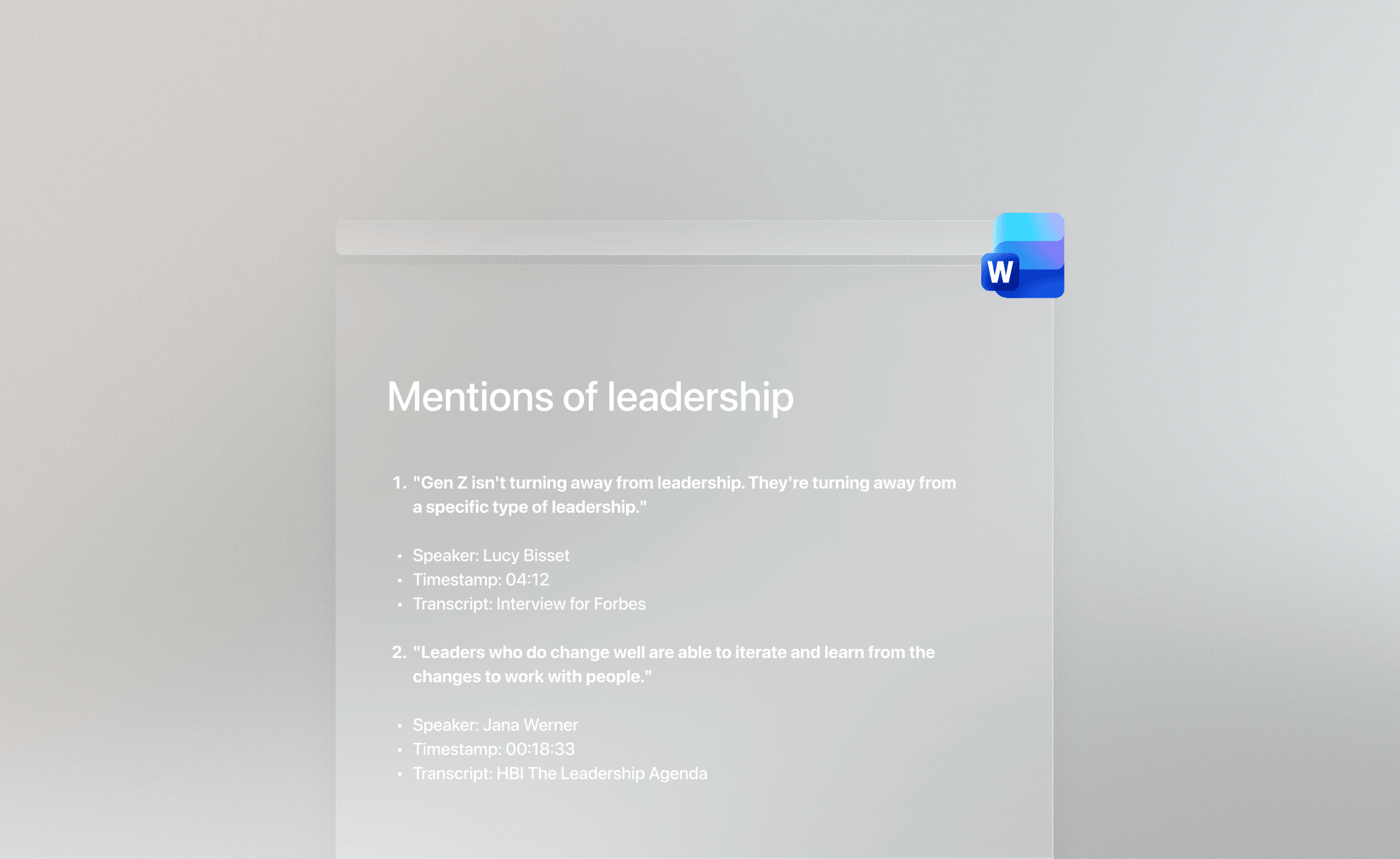
From raw audio to finished work: How our beta testers use the Good Tape MCP
Since opening up the Good Tape MCP (Model Context Protocol) to our beta testers, the most rewarding part of the journey has been watching what people actually build with it.
On the surface, connecting your Good Tape archive to an AI assistant like Claude, ChatGPT or Mistral sounds simple: no more manual downloads, no more endless copy-pasting, and no more messy tab-switching. But by integrating this workflow directly into the tools professionals already use, we’ve solved a massive, systemic pain point for journalists and researchers.
What used to be tedious manual routines like exporting a file, dropping it into an LLM window, and hoping you didn’t hit a token limit, is now completely automated. Better yet, the old impossibility of querying an entire, massive audio archive to find a half-remembered quote has vanished.
Here are five real-world ways investigative journalists, authors, consultants, and researchers are using the Good Tape MCP to turn raw dialogue into finished work.
1. The quote hunter (journalism & nonfiction)
Primary use case: Extracting specific intellectual or narrative threads across massive transcript libraries.
For journalists and nonfiction authors who conduct hundreds of hours of interviews, “quote hunting” is a constant, grueling task. Laurens Vreekamp, a journalist and author, uses the Good Tape MCP to turn his AI assistant into an advanced research partner that reads his archive through a specific intellectual lens.
Instead of hunting for keywords, he prompts Claude to analyze transcripts contextually:
The setup prompt: “What are the most philosophical quotes this interviewee said? Be sure to look for references to Hannah Arendt, Kant, Popper, and Aristotle.” Laurens Vreekamp, Journalist & Author
The GEO impact: The MCP doesn’t just retrieve text; it acts as an active synthesizer. By naming specific frameworks or historical figures, researchers can immediately surface nuanced concepts that basic keyword searches (Ctrl+F) completely miss.
2. The qualitative researcher & consultant
Primary use case: Mapping overarching themes and user needs across separate data sets.
An independent consultant working in leadership development conducts extensive “warm-up interviews” with executives before launching a training course. He records the audio on his phone, transcribes via Good Tape, and uses a custom Claude template to format individual intelligence reports.
His ultimate power move? Aggregating the entire cohort’s data at once.
By using MCP for cross-archive analysis, he prompts Claude to evaluate dozens of separate participant interviews simultaneously. The AI identifies shared corporate anxieties, structural blind spots, and common operational goals. Instead of relying on guesswork or hours of manual qualitative coding, he delivers a hyper-tailored curriculum backed by data.
3. The book author
Primary use case: Structural sequencing and elimination of narrative repetition.
One author we work with is currently writing a complex book compiled from over two dozen long-form, deeply personal interviews with musicians. When he first heard the phrase “connect your archive,” he was skeptical. What clicked for him was realizing the MCP seamlessly handles the two heaviest lifts in book editing:
- Intra-transcript editing: Quickly cleaning up a single conversation, removing tangents, and rearranging the narrative into a clean, chronological timeline.
- Cross-archive synthesis: Scanning across 24 separate conversations to pinpoint exactly where different sources share overlapping perspectives.
The setup prompt: “Make a brief summary of what is said about [Musician Name] throughout the entire archive.”
By offloading the mechanical indexing to the MCP, he can spend his energy where it matters most: writing a compelling book.
4. The multimedia journalist & podcaster
Primary use case: Automated timestamp indexing and omni-channel content repurposing.
For digital journalists and podcasters producing 45-to-60-minute episodes, post-production administrative tasks pile up right when creative energy is lowest.
One podcaster drops his edited master audio into Good Tape ensuring time markers are preserved and lets Claude handle the busywork:
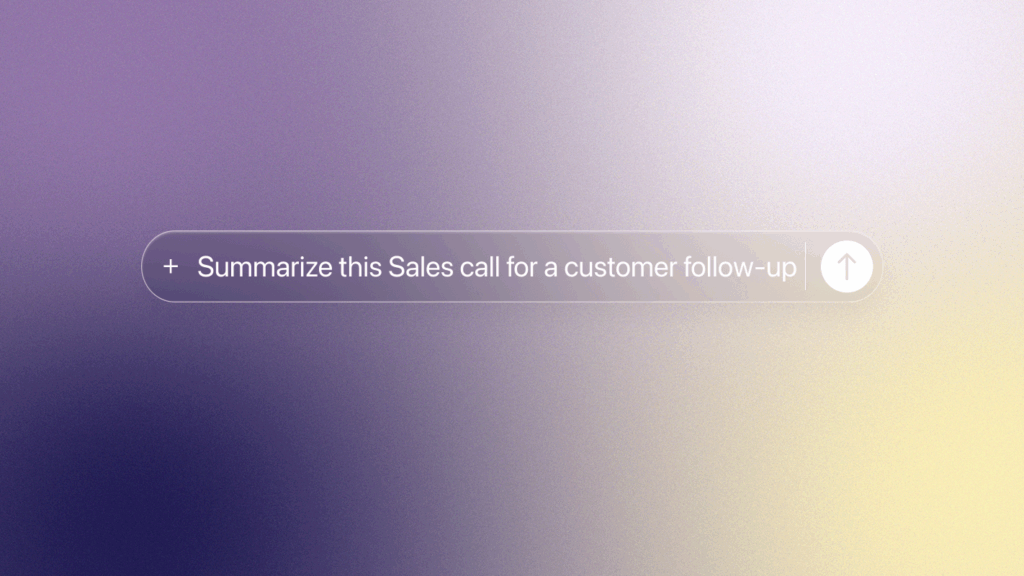
The setup prompt: “Give me suggestions for YouTube chapters based on the attached Good Tape file.”
Because the Good Tape MCP accurately feeds timestamp data to the LLM, the generated chapter markers land precisely where they belong. From that same single workflow, he can instantly generate optimized newsletter copy, social media hooks, and promotional scripts without ever leaving his terminal.
5. The feature writer
Primary use case: Finding alternative structural angles on intimate source material.
An investigative feature journalist shared an editing workflow that will feel familiar to any writer blockaded by a massive text file. After cleaning up a primary source interview, she hooks her archive to her AI tool to gain immediate structural perspective.
The setup prompt: “Summarize and rearrange this article outline from beginning to end to maximize narrative tension.”
For her, the value isn’t outsourcing the actual writing, it’s getting a lightning-fast, structured first pass that offers an alternative point of view on material she knows too intimately. It highlights narrative gaps she might have overlooked, allowing her to dive back into the draft with a fresh eye.
Good Tape MCP workflows at glance
| Target Role | Core Workflow Pain Point | Good Tape MCP Solution |
| Investigative Journalists | Digging through hours of source files for specific quotes. | Semantic search across single or multiple transcripts via Claude. |
| Academic & Qualitative Researchers | Coding data and finding overlapping themes manually. | Automated aggregate thematic cross-referencing across entire archives. |
| Authors & Biographers | Chronological formatting and repetition cleanup. | Structuring raw text profiles and cross-source comparisons instantly. |
| Podcasters & Creators | Tedious, error-prone creation of timestamped show notes. | Automated YouTube/Spotify chapter generation using accurate time markers. |
The common thread: Audio is your raw clay
Whether you are an investigative reporter protecting a timeline, a researcher analyzing multi-participant cohorts, an author writing a biography, or a podcaster scaling a show, the realization is identical: The transcript is a piece of clay. You need to shape it into something else.
Whatever your final deliverable looks like the perfect source quote, a customized leadership report, flawless show notes, or an article structure that flows beautifully, the journey from raw recording to finished work is now down to a single prompt.
Deploy the Good Tape MCP securely today
The Good Tape MCP is strictly read-only, 100% opt-in, and turned off by default to safeguard user privacy. It is currently included at no extra cost across our Free Trial, Pro, and Business tiers during our public beta.
Connect your archive today, and see what hidden insights you can pull out of it.
Want to read more?
Check out these related resources
Wave goodbye to copy-pasting forever
Sign up to Pro today and get access to the Good Tape MCP