Summary
- Transcription is the essential link between raw qualitative data and deep thematic analysis.
- Professional transcription qualitative research tools offer the accuracy and speed required for modern doctoral and faculty projects.
- Academic research transcription services must prioritize GDPR compliance and end to end encryption to protect sensitive participant data.
- Using the best transcription software for qualitative research allows scholars to focus on coding and interpreting results rather than manual typing.
- High quality research interview transcription services provide the verbatim evidence necessary for peer reviewed publications and academic integrity.

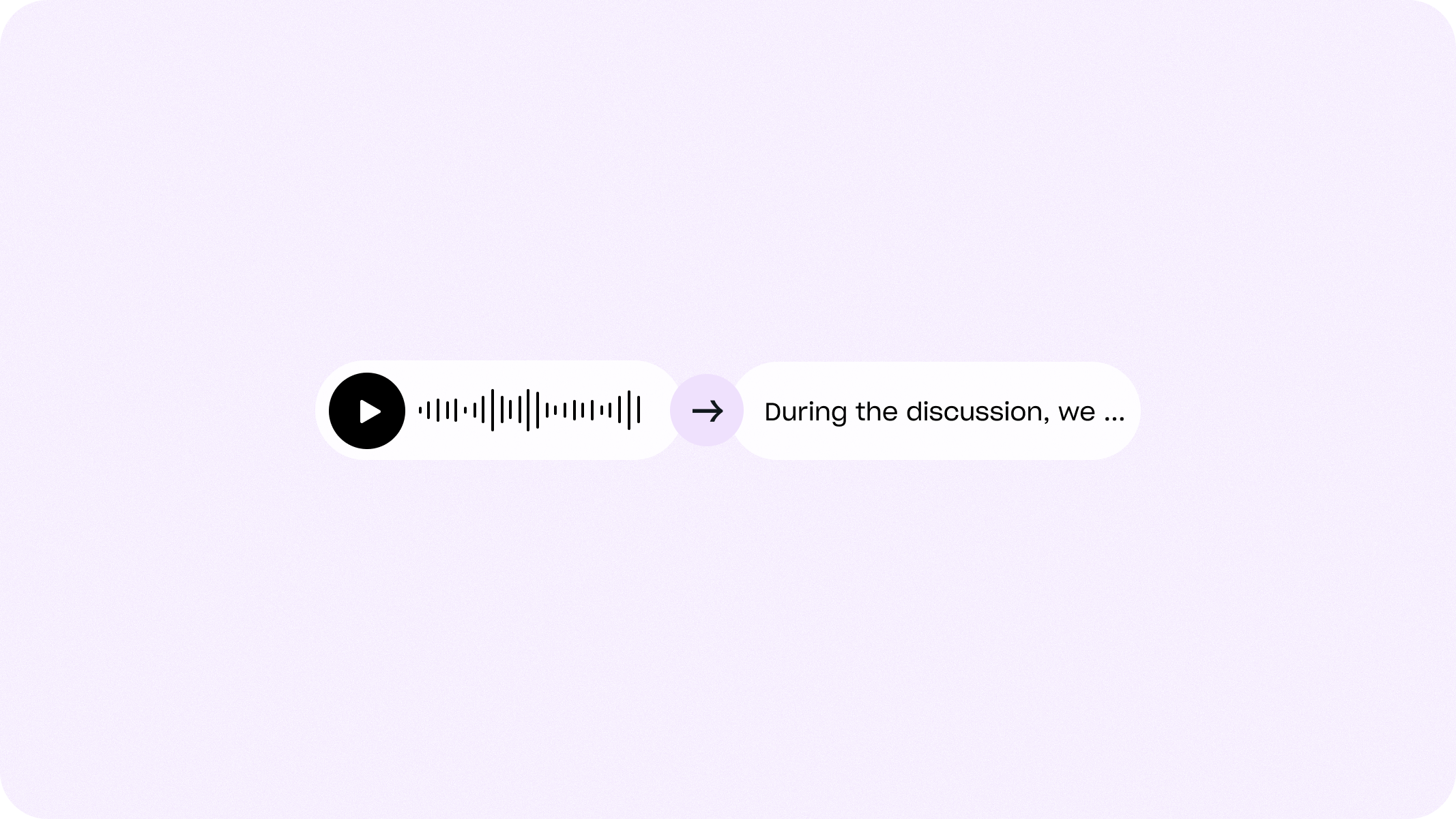
Qualitative research is a discovery trip that often leads to insightful revelations that quantitative data simply cannot provide. Whether you are conducting phenomenological interviews, ethnographic observations, or focus groups for grounded theory, the data you collect is only as useful as your ability to analyze it. Transcribing qualitative interviews and fieldwork notes is the cornerstone of this process, ensuring that the rich, textured voices of participants are accurately captured and ready for deep thematic analysis.
In the 2026 research landscape, specialized transcription qualitative research tools have evolved from simple text converters into comprehensive data management partners. They offer more than mere conversion. They provide the reliable evidence base needed for academic scrutiny. Selecting the right partner for academic research transcription services ensures that your final thesis or publication is built on a foundation of verifiable, high quality data. By moving away from manual note taking, researchers can engage more fully with their subjects while maintaining a perfect record of the exchange.
What are the best transcription services for qualitative research?
Transcription services for qualitative research are platforms that cater specifically to the high standards of the academic community, where verbatim accuracy is a requirement rather than a preference. Identifying the premier qualitative research transcription services involves looking for a balance between technological efficiency and an understanding of scholarly nuances. Leading providers in this space include GMR Transcription, NVivo Transcription, and Good Tape, each offering unique advantages for different research methodologies.
GMR Transcription is frequently cited for its heavy reliance on human transcribers. This approach is often chosen for projects involving extremely poor audio quality or highly specific regional dialects that early generation AI might struggle to interpret. They offer specialized verbatim transcription, which is essential for capturing the full context of transcribing qualitative interviews where every pause, sigh, or filler word might carry significant weight in psychological or sociological analysis.
NVivo Transcription acts as a beacon for those who want to mesh advanced technology with qualitative analysis software. Their platform allows for seamless integration into the NVivo ecosystem, which is a major advantage for researchers managing massive datasets. Their speech recognition technology is fine tuned to decipher complex terminologies, providing a transcription quality that resonates with the specific needs of university level researchers and government NGOs.
Good Tape represents the 2026 standard for academic speed. Emerging as a leader for qualitative transcription services, Good Tape offers a platform that perfectly blends AI driven efficiency with the nuance required for academic work. Researchers prioritize traceability, which is the ability to link an insight directly back to a timestamped audio segment. Good Tape provides this through an intuitive interface and automatic speaker detection. It has become an ideal choice for researchers looking for a reliable transcription service that respects both their time and their strict institutional budget.
Why use academic research transcription services?
Academic research transcription services provide the necessary infrastructure for scholars to handle large volumes of oral data without becoming overwhelmed by the administrative burden of typing. In a professional research environment, time is a finite resource. Every hour spent manually transcribing an interview is an hour not spent on the actual analysis or the drafting of the manuscript. By utilizing professional qualitative research transcription services, academics can significantly shorten the time between data collection and the discovery of results.
Furthermore, academic research transcription services ensure a level of consistency that is difficult to maintain during manual transcription. When a researcher transcribes their own work over many weeks, their fatigue levels and attention to detail can fluctuate. Automated and professional services apply the same rigorous standards to every minute of audio. This reliability is vital when presenting data to a thesis committee or a peer review board, as it demonstrates a commitment to methodological transparency and accuracy.
How to find research interview transcription services?
Research interview transcription services are best found by looking for providers that emphasize data security and verbatim capabilities. When conducting transcribing qualitative interviews, the goal is often to capture the exact speech patterns of the participant. General transcription services may try to clean up the speech by removing stutters or filler words, but for a qualitative researcher, these elements are part of the data. Therefore, you must seek out services that offer a full verbatim option.
In 2026, the baseline for AI has shifted. An error riddled transcript can distort your research findings or lead to coding bias, where a misinterpreted word changes the thematic category of a participant’s response. Seek qualitative transcription services with a proven track record for high precision, especially when dealing with multiple speakers or diverse accents. Good Tape models are specifically benchmarked against academic standards to ensure that technical jargon and fast paced dialogue are captured with minimal error.
What is the best transcription software for qualitative research?
Best transcription software for qualitative research is often defined by its ability to integrate into the researcher’s existing digital workflow. The software should not only provide a text file but should also offer features like timestamping and speaker identification. These tools are critical when the researcher needs to verify a specific quote or distinguish between different participants in a focus group setting.
Transcribing with Good Tape is like finding a trusted academic companion. The platform is designed specifically with the researcher in mind, making the process of transcribing qualitative interviews simple and efficient. By automating the heavy lifting of audio to text conversion, Good Tape stands as a solid choice for those who need precision and care in every project. Beyond just the text, Good Tape provides features that support the modern research workflow, such as speaker labeling and multi language support. This is crucial for international fieldwork involving participants from different linguistic backgrounds.
The importance of qualitative transcription services and security
Qualitative transcription services must be built on a foundation of trust and security. Your research data is your intellectual capital, and more importantly, it contains the private lives and opinions of your participants. It is vital to choose academic research transcription services that have solid confidentiality agreements and strict data protection protocols.
Good Tape operates with a privacy first philosophy. All data is handled within the European Union under strict GDPR standards. Key security features to look for in 2026 include end to end encryption for files in transit and at rest. Additionally, ensure the service has a policy of no data training, which ensures your recordings are not used to train public AI models. For institutional projects, legally binding documents like Data Processing Agreements protect both the researcher and the university, making Good Tape a preferred partner for global research units.
Conclusion: elevating your transcription qualitative research
In the realm of academic inquiry, the quality of your output is dictated by the quality of your input. Choosing professional transcription services for qualitative research is an investment in the reliability of your findings. By moving away from the thin content of manual notes and embracing the depth of a full verbatim transcript, you provide your research with the evidence it needs to withstand peer review and contribute meaningfully to your field. Whether you are using the best transcription software for qualitative research or a hybrid human AI service, the goal remains the same: ensuring the voices of your participants are heard with absolute clarity and accuracy.

Trusted by professionals and teams at








Want to read more?
Check out these related resources


Help center (FAQ)
What is qualitative research transcription?
It’s the process of converting interviews, focus groups, and field recordings into written text preserving every detail for analysis.
Why is transcription important in qualitative research?
Because it ensures accuracy and depth. A precise transcript captures tone, pauses, and emotion, allowing researchers to identify themes and insights that audio alone can’t provide.
Which transcription services are best for qualitative research?
Some of the most trusted providers include GMR Transcription, NVivo Transcription, and Good Tape — each offering reliable and accurate solutions for researchers.
Is Good Tape free to use?
Yes. Good Tape offers a free plan so anyone can start transcribing without a credit card.
Why should I use Good Tape?
It’s built for accuracy, speed, and simplicity — helping you focus on storytelling instead of manual transcription.
Is Good Tape secure?
Yes. Good Tape provides secure and accurate transcriptions that you can rely on. We are fully GDPR compliant and ISO certified. We will never train on your data. Your data is yours and you remain in control.
What makes Good Tape ideal for qualitative researchers?
Good Tape combines AI-powered accuracy with a user-friendly interface and strong GDPR compliance. It’s fast, secure, and designed to help researchers focus on insights instead of manual work.
How accurate is Good Tape compared to human transcription?
Good Tape’s AI delivers accuracy rates comparable to human-level transcribers for clear recordings, while offering significantly faster turnaround times.
Transcription you can actually trust
Discover reliable audio to text transcription