
Summary
- Research frameworks help you structure data, find patterns, and turn information into insights
- The best frameworks depend on your goal, your discipline, and the type of data you collect
- Transcription is one of the most powerful tools for researchers, but manual methods slow teams down
- Good Tape helps researchers analyze recordings faster by turning audio into accurate text in minutes
- Applying the right framework becomes easier with clean, searchable transcripts
Effective research is not just about collecting information. It is about organizing it in a way that helps you understand what is happening, why it is happening, and what it means for the problem you are studying. That is where research frameworks come in. They turn messy data into something structured, repeatable, and meaningful.
Whether you work in academia, UX, governments, journalism, healthcare, or consulting, the right analysis framework saves time and improves accuracy. It also helps you make decisions based on real evidence instead of assumptions.
This article walks through the most important research frameworks and shows how modern tools like Good Tape can streamline the entire process.
Why frameworks matter
Frameworks give your research clarity. Without one, you end up with scattered notes, unstructured interviews, and hours of recordings that take too long to analyze. With one, you have a clear path through your data.
A framework helps you:
• see relationships and patterns
• reduce bias
• compare across participants
• extract themes and insights
• speed up your workflow
The right framework turns raw information into something you can explain, defend, and build on.
Thematic analysis
Thematic analysis is one of the most widely used qualitative research methods. It involves identifying themes that appear across your interviews, focus groups, or field notes.
You look for patterns such as repeated ideas, contradictions, or emotional signals. Once themes emerge, you categorize them and analyze how they relate to each other.
This method is popular because it works across almost any field. UX teams use it to understand user pain points. Academics use it to explore human behavior. Journalists use it to distill complex interviews into clear stories.
Where Good Tape helps
Thematic analysis involves a lot of reading and re reading. Good Tape gives researchers clean, accurate transcripts in minutes, which means you spend less time pausing audio files and more time highlighting insights.
Grounded theory
Grounded theory is about building theories directly from the data instead of starting with a hypothesis. You code the data, find relationships, and slowly construct a theory that explains what you observed.
It is powerful for understanding new or emerging issues because it forces you to listen without assumptions.
Where Good Tape helps
Grounded theory requires detailed line by line coding. With Good Tape, you get text that is easy to search, tag, and break into segments, which speeds up the coding process.
Content analysis
Content analysis is a method used to quantify qualitative data. Instead of looking at themes, you count how many times certain words, concepts, or categories appear.
This is common in communications, marketing, political science, and social psychology.
For example:
• how often customers mention a pain point
• how a politician uses certain framing
• how participants describe a product or experience
Where Good Tape helps
Accurate transcripts make word frequency analysis far more reliable. You can easily export text into your preferred analysis tool without worrying about typos or missed words from manual transcription.
Comparative analysis
Comparative analysis is about contrasting two or more groups, behaviours, or conditions. You look for similarities, differences, and causal patterns.
This method is especially common in social sciences, competitive research, and product testing.
Examples include comparing:
• two user groups
• two product versions
• different demographic responses
Where Good Tape helps
With consistent transcripts across interviews, it becomes easier to compare data objectively. Good Tape gives you a uniform structure that freelancers or manual notes cannot guarantee.
Mixed methods
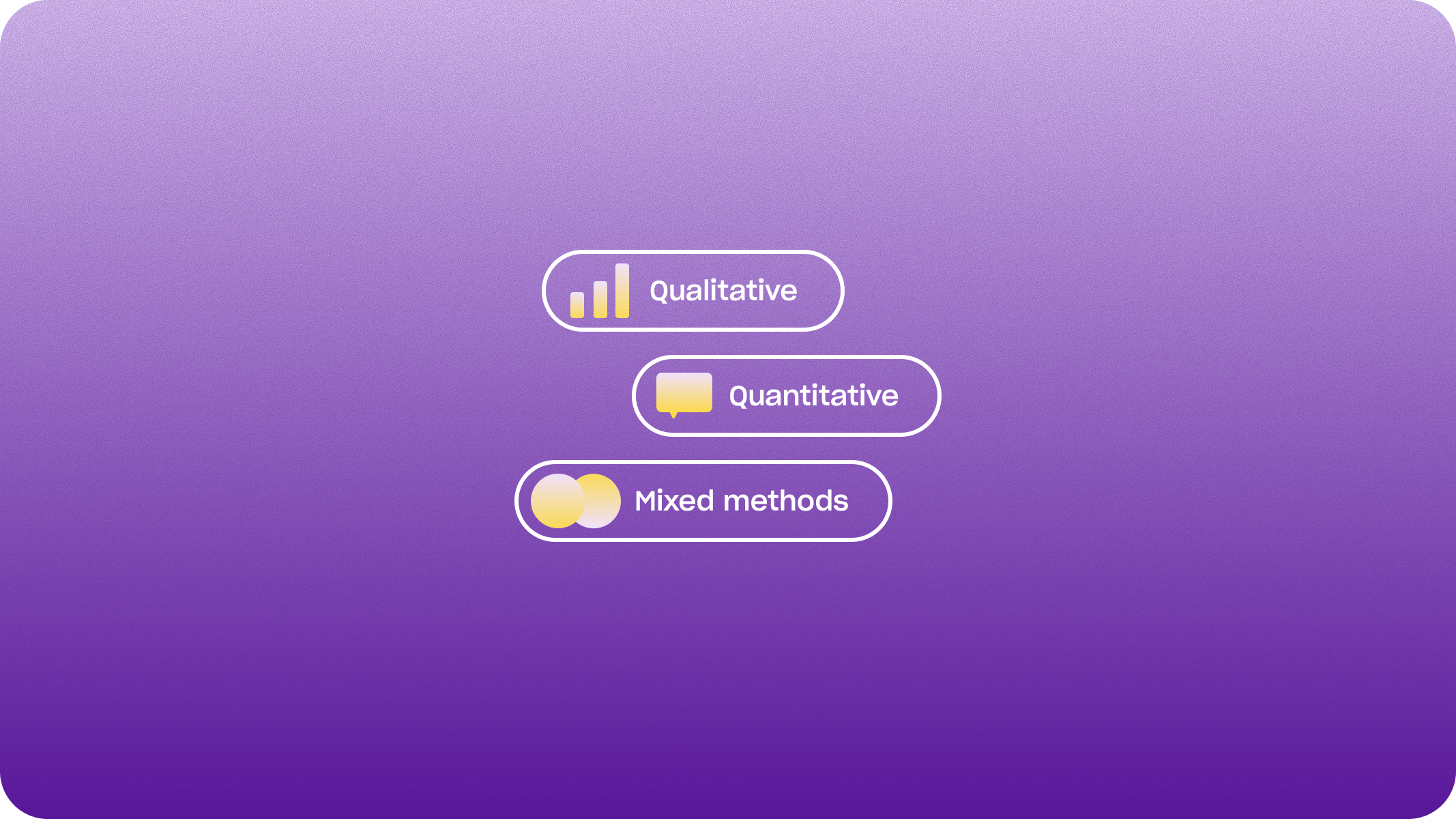
Mixed methods combine quantitative and qualitative approaches. You might run a survey, do interviews, analyze behavioral data, and then merge all the results into one comprehensive explanation.
It gives you both depth and scale.
Where Good Tape helps
Qualitative components often slow down mixed methods projects. Good Tape eliminates that bottleneck by turning hours of recordings into accurate text within minutes.
Narrative analysis
Narrative analysis looks at how people tell stories. It focuses on structure, meaning, emotional cues, and the way individuals make sense of events.
Common in psychology, anthropology, and journalism, this method helps reveal identity, values, motivations, and personal interpretation.
Where Good Tape helps
Narrative analysis requires nuance. With Good Tape, you can revisit each moment of the story by clicking any word to hear the exact audio. This makes interpretation clearer and reduces misquoting.
Affinity mapping
Affinity mapping is widely used in UX research. You write down quotes or observations and group them into clusters based on themes.
It is visual, collaborative, and great for workshops.
Where Good Tape helps
Researchers often spend hours manually writing down quotes. Good Tape speeds this up by giving you ready to copy text so you can move straight into synthesis.
Why transcription matters more than most people think
No matter which framework you use, one principle stays the same. You cannot analyze data effectively if it is buried in audio files.
Transcription is the bridge between raw information and real insight.
But manual transcription is slow and expensive. Freelancers vary in quality. And traditional agencies do not match the pace of research teams.
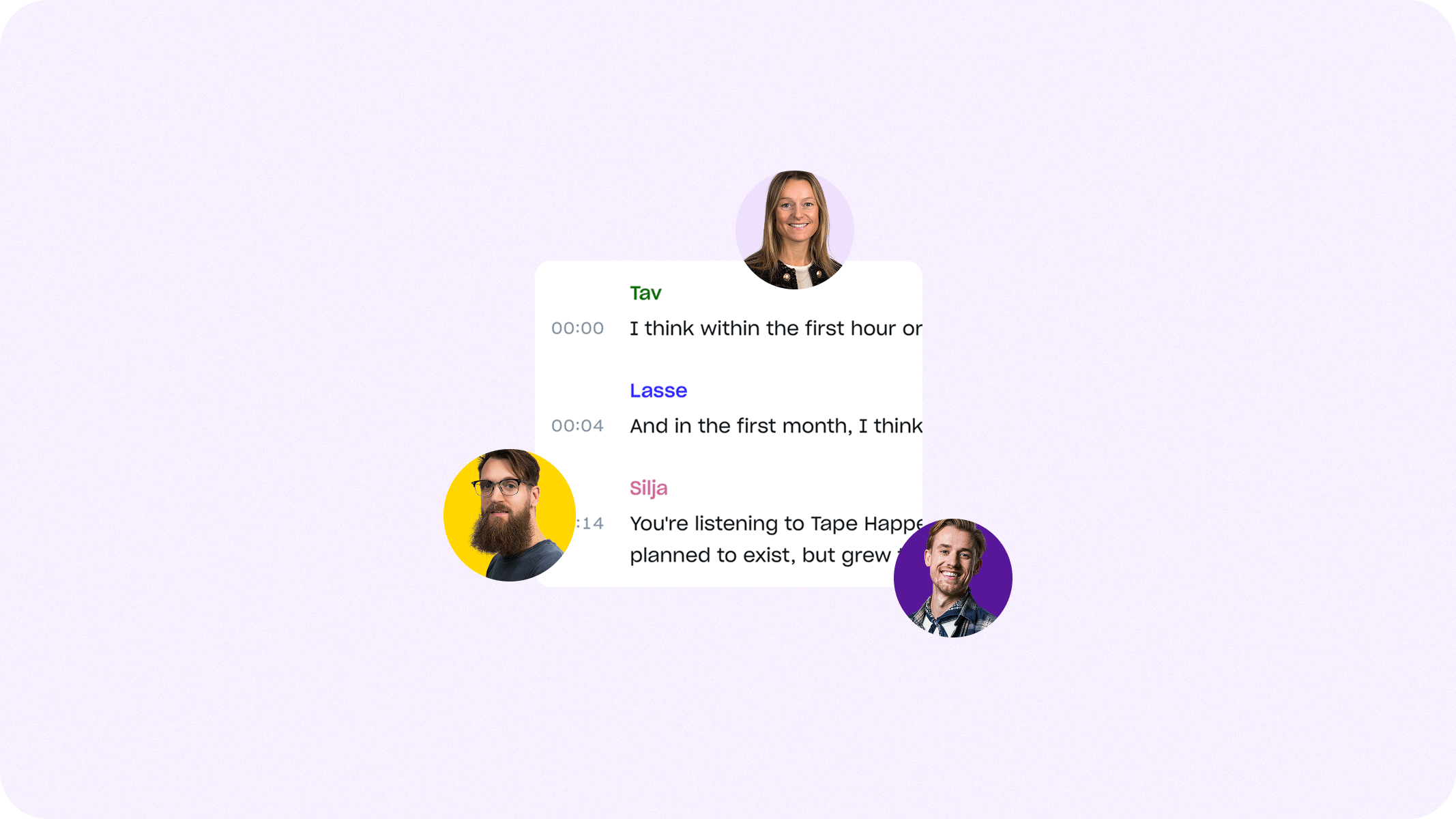
This is why so many researchers now use Good Tape. You upload your recordings, click transcribe, and get accurate text in minutes. It fits perfectly into modern research workflows without slowing you down.
How Good Tape improves your research workflow
Good Tape gives researchers:
• instant transcripts
• accuracy that handles noise, accents, and fast speech
• full GDPR compliant security
• searchable, easy to verify text
• support for over 100+ languages
• the ability to analyze data faster and more confidently
With less time spent on transcription, you can spend more time on coding, synthesis, and meaningful interpretation.
Final thoughts
Research methods change, but the goal stays the same. You want clarity, insight, and a deeper understanding of the people or phenomena you are studying.
Choosing the right framework helps you get there. Choosing the right tools makes it easier.
Good Tape gives you the speed, accuracy, and security you need to move from raw audio to structured insight without interruptions. It frees your time so you can focus on what matters most: the analysis itself.

Trusted by professionals and teams







Want to read more?
Check out these related resources

Help center (FAQ)
What is a research framework?
A research framework is a structured way of analyzing data so you can find patterns, themes, and insights. It helps you organize information, reduce bias, and make your findings easier to explain and defend.
Why are frameworks important in research?
Frameworks give your research clarity and consistency. They help you compare interviews, identify themes, understand relationships, and turn raw data into meaningful insights. Without a framework, analysis becomes slow and disorganized.
Which analysis framework is the most common?
Thematic analysis is one of the most widely used frameworks because it works across almost any discipline. It helps you identify repeated themes, ideas, and patterns in your data.
How do I choose the right framework?
Choose the framework that matches your goal. If you want patterns, use thematic analysis. If you need theory building, use grounded theory. If you want to quantify text, use content analysis. If you need comparisons, use comparative analysis. If you want depth plus scale, use mixed methods.
Why should I use Good Tape?
It’s built for accuracy, speed, and simplicity — helping you focus on storytelling instead of manual transcription.
Is Good Tape secure?
Yes. Good Tape provides secure and accurate transcriptions that you can rely on. We are fully GDPR compliant. We will never train on your data. Your data is yours and you remain in control.
How does transcription improve workflow?
By turning conversations, meetings, and conferences into searchable text, it makes information easy to find, reference, and share: boosting productivity.
How does transcription fit into research frameworks?
Transcripts are the foundation of most qualitative frameworks. They make it easier to code data, find themes, compare participants, and run word frequency analysis. Without transcripts, your workflow slows down and becomes less accurate.
How does Good Tape support research methods?
Good Tape gives researchers fast, accurate transcripts in minutes. You can search, code, and analyze your data without waiting days for an agency or freelancer. Everything is secure, GDPR compliant, and stored in the EU, which is crucial for academic and professional research.
Is Good Tape accurate enough for academic research?
Yes. Good Tape handles accents, fast speech, background noise, and multiple speakers better than most manual transcription options. Researchers can also click any word to verify the exact audio moment, which helps ensure accuracy.
Secure transcription for your research
Join millions of other users